


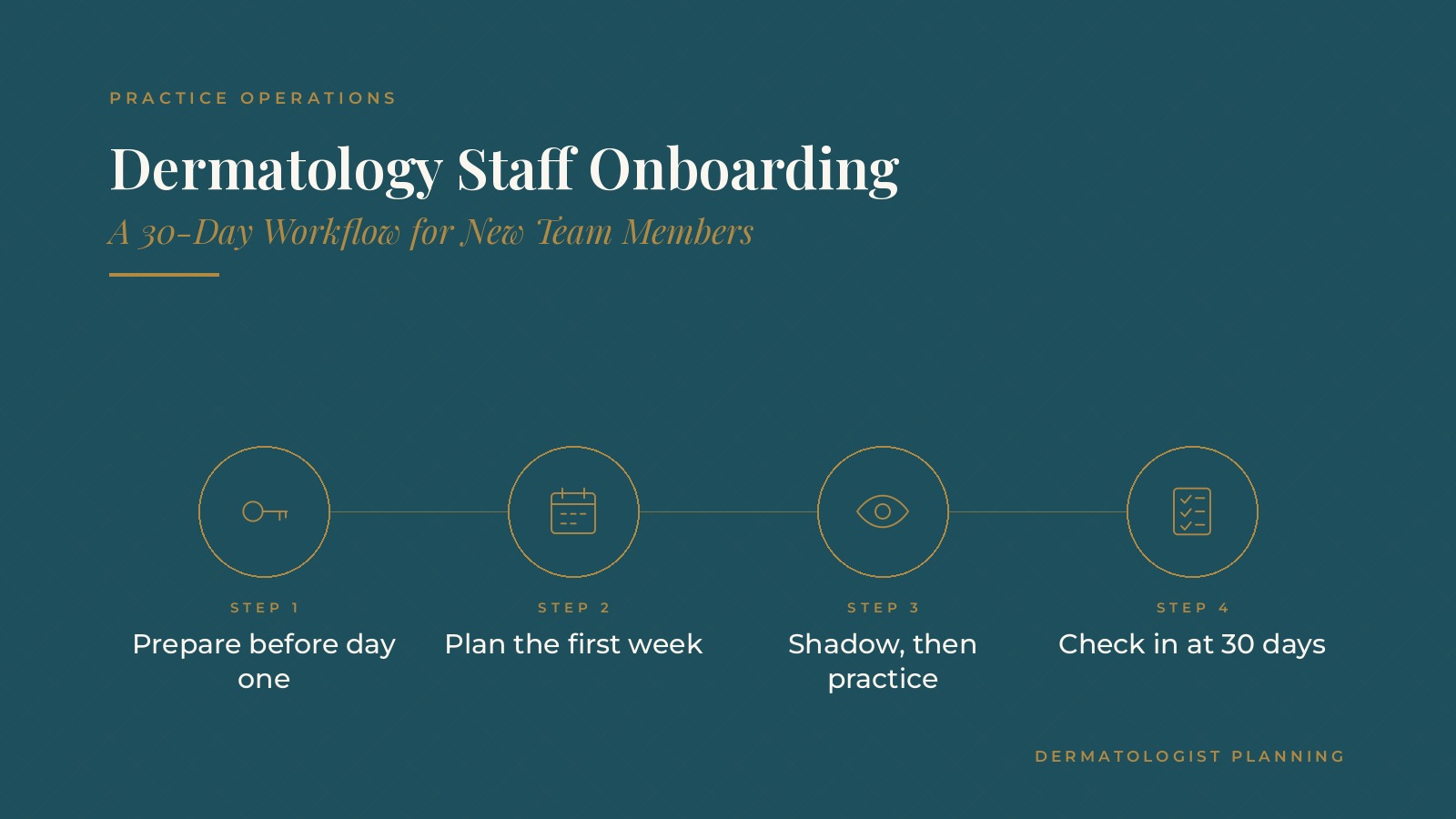
Dermatology Staff Onboarding | A 30-Day Workflow for New Team Members
Dermatology staff onboarding is the planned process of bringing a new team member into the practice, from the days before their start through their first month. A clear onboarding plan helps new staff learn the systems, routines and people faster and lets the rest of the team keep clinic days on track.
In short, dermatology staff onboarding tends to work best when accounts and equipment are ready before day one, the first week follows a written plan, new staff shadow experienced colleagues before working on their own, a manager checks in at set points through day 30 and the plan lives in a reusable checklist.
This resource from Dermatologist Planning explains what to prepare before a start date, how the first week is often organized, how shadowing and practice work, what the 30-day check-in covers and the questions practices often bring to a practice operations professional.
Key takeaways
- Prepare accounts and equipment before day one.
- Follow a written first week plan.
- Shadow first, then practice with support.
- Check in at set points through day 30.
- Keep the plan in a reusable checklist.
Why dermatology staff onboarding matters
Busy clinics leave little time to teach
Dermatology schedules often move quickly, with skin checks, procedures and cosmetic visits in the same day. Without a plan, training happens in rushed moments between patients.
Consistency across the team
A shared onboarding plan helps every new hire learn the same steps for check-in, rooming, scheduling and follow-up, which keeps the patient experience steady.
A better first impression for staff
New team members who arrive to a ready workstation and a clear schedule tend to settle in faster and feel more confident.
Fewer repeated questions
When answers live in a written plan, experienced staff spend less time repeating the same explanations.
Preparing before day one
Accounts and access
Logins for scheduling, charting, email, phones and any messaging tools are created ahead of time, with access matched to the role.
Equipment and workspace
A ready workstation, headset, badge, keys and any scrubs or uniforms let the new hire start learning instead of waiting for setup.
A welcome message
A short message before the start date with arrival time, parking, who to ask for and what the first day includes eases first day nerves.
A named onboarding lead
Many practices assign one experienced colleague as the main contact for questions during the first month. The dermatology Microsoft 365 guide covers how practices often manage account setup for new users.
Dermatologist Planning can introduce you to independent practice operations professionals who work with dermatology practices on onboarding plans, training checklists and team routines. To request an introduction, contact us or call or text (972) 616-4581. You can also read about dermatology practice operations.
Planning the first week
Day one
The first day usually covers a tour, introductions, workstation setup, key office guidelines and the practice's required trainings.
Days two and three
These days often focus on core systems, such as the scheduling and charting tools, phone system and messaging, with time to practice on test records where available.
Days four and five
By the end of the week, many new hires begin handling simple tasks with an experienced colleague nearby, such as answering routine calls or preparing rooms.
End of week check-in
A short meeting at the end of the first week lets the new hire ask questions and lets the manager adjust the plan for week two.
Weeks two through four
The rest of the month usually builds from simple to complex tasks. A new front desk team member may move from routine calls to new patient scheduling and then to procedure day bookings, with the onboarding lead checking work along the way.
Shadowing and guided practice
Watch first
Shadowing an experienced front desk coordinator, medical assistant or scheduler shows the real flow of a dermatology clinic day, including busy periods.
Then practice with support
After shadowing, the new hire performs the same steps while the experienced colleague observes and offers tips.
Role specific skills
Front desk staff may focus on check-in, intake paperwork and scheduling, while medical assistants focus on rooming, room setup and procedure day preparation. The dermatology medical assistant training guide covers that role in more depth.
The 30-day check-in
What it covers
The 30-day check-in usually reviews which tasks the new hire handles on their own, which still need support and any questions about systems or routines.
Two-way feedback
Many practices ask the new hire what was clear, what was confusing and what could improve the onboarding plan for the next person.
Setting next goals
The meeting often ends with a short list of skills to build over the next 60 days and a date for the next check-in.
Removing access when roles change
The same checklist that creates accounts at the start can list the steps for changing or removing access when someone moves to a new role or leaves the practice.
Keeping a reusable onboarding checklist
One checklist per role
A written checklist for each role lists the setup tasks, first week topics, shadowing sessions and check-in dates, so nothing depends on memory.
Shared and easy to update
Keeping the checklist in a shared location lets managers update it when a system or routine changes.
Linking to written routines
The checklist can point to step by step guides for daily tasks, such as opening the office or checking in a new patient. The dermatology front desk workflow guide shows how those routines are often written.
Questions practices bring to a practice operations professional
Common planning questions
- Which tasks belong in the first week for each role?
- Who leads onboarding when the main contact is out?
- How are accounts created and removed as staff join and leave?
- How will the practice know whether onboarding is working?
Measuring onboarding
Many practices track how long it takes a new hire to handle core tasks on their own and how many new hires are still with the practice after several months.
Keeping records in the practice's name
Many practices keep onboarding checklists, training materials and system accounts under practice logins, with outside professionals added as users.
Frequently asked questions
What is dermatology staff onboarding?
It is the planned process of bringing a new team member into a dermatology practice, from preparation before day one through the first month.
What should be ready before a new hire starts?
Common items include system logins, a ready workstation, a headset, a badge or keys, a welcome message and a named onboarding lead.
How long does onboarding usually take?
Many practices use a 30-day plan for core skills, followed by goals for the next 60 days and further check-ins.
Why is shadowing part of onboarding?
Shadowing shows new staff the real flow of a clinic day before they practice the same steps with an experienced colleague nearby.
How do practices keep onboarding consistent?
Many keep a written checklist for each role in a shared location and update it when systems or routines change.
Request an introduction
Dermatologist Planning can introduce you to independent practice operations professionals who work with dermatology practices on staff onboarding, training plans and team workflows. Learn more about dermatology practice operations, then take the short Dermatologist Planning Business survey and request an introduction. You can also call or text (972) 616-4581, or contact us. The form goes to [email protected].

