Dermatology Phone Etiquette | Front Desk Greetings, Holds and Transfers
Dermatology phone etiquette is the set of habits a front desk team uses on every call: a warm greeting, careful listening, polite holds, smooth transfers and accurate messages. For many people, the first phone call is their first real impression of the practice.
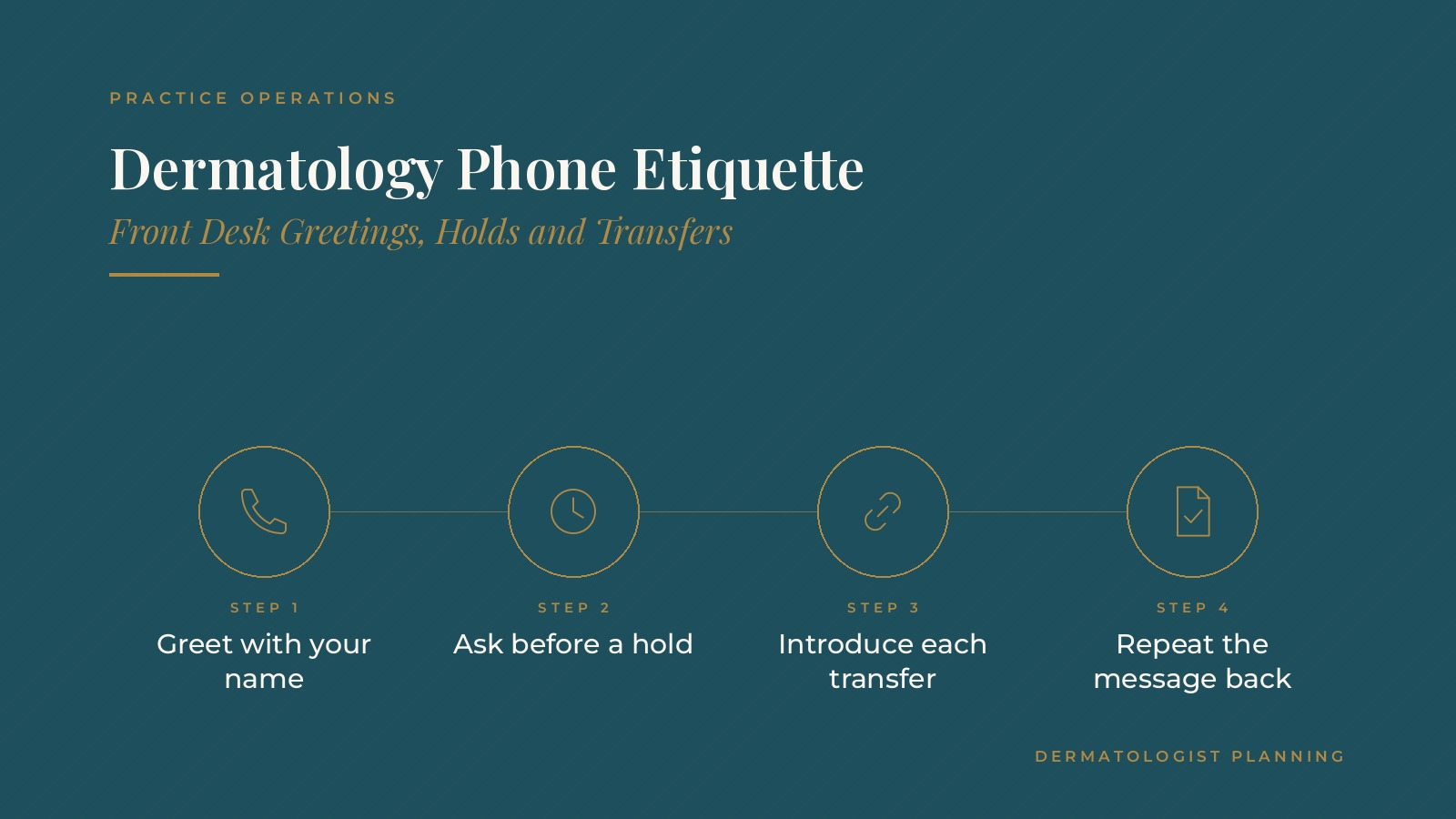
In short, good dermatology phone etiquette usually comes down to answering with the practice and staff name, asking before placing a caller on hold, introducing each transfer, repeating messages back, closing the call with a clear next step and reviewing a few calls together each month.
This guide from Dermatologist Planning covers greetings, tone, holds, transfers, message taking, busy periods, closing the call and the questions practices often bring to a practice operations professional.
Key takeaways
- The greeting sets the tone for the whole call.
- Ask before placing anyone on hold and check back often.
- Introduce the caller before completing a transfer.
- Repeat messages back and confirm the callback number.
- Review real calls together to keep skills sharp.
Why dermatology phone etiquette matters
The first impression
People calling a dermatology practice may be worried about a new spot, looking for a cosmetic consult or trying to move an appointment. A calm, friendly voice helps every one of those calls start well.
Fewer repeat calls
Clear answers and accurate messages mean callers do not need to phone back to check on something, which keeps the lines open for others.
A consistent experience
When every team member follows the same basic habits, callers get the same courteous experience no matter who picks up. That consistency matters most on hectic days, when a short shared routine keeps the tone steady even as the lines stay busy.
Greetings and tone
A simple greeting script
A short greeting such as the practice name, the staff member's first name and an offer to help lets callers know they reached the right place and who they are speaking with.
Pace and warmth
Speaking at an even pace, smiling while talking and using the caller's name once or twice make the call feel personal without slowing it down.
Closing the call
Ending with a summary of what happens next, such as the appointment date or when a nurse will call back, and a thank you leaves the caller with no loose ends.
Identify the reason early
Asking how the team can help in the first few seconds lets the staff member route the call quickly, whether it is scheduling, a question for a nurse or a cosmetic inquiry.
The dermatology front desk workflow guide shows how phone duties fit alongside check-in and checkout.
Dermatologist Planning can introduce you to independent practice operations professionals who work with dermatology practices on phone greetings, call handling and front desk training. To request an introduction, contact us or call or text (972) 616-4581. You can also read about dermatology practice operations.
Placing callers on hold
Ask first
Asking whether the caller can hold, and waiting for the answer, is a small courtesy that callers notice.
Explain the reason
A short reason such as checking the schedule or finding the right person helps the wait feel purposeful.
Check back regularly
If a hold runs longer than expected, coming back to the line to give an update shows the caller they have not been forgotten. Offering a callback is a good option when the wait will be long.
Transferring calls smoothly
Warm transfers when possible
A warm transfer means the staff member briefly tells the receiving person who is calling and why before connecting the call, so the caller does not need to repeat everything.
Know where calls go
A simple list of which extension or team handles scheduling, cosmetic inquiries, nurse questions and records requests keeps transfers accurate. Posting the list at each desk and updating it when roles change saves guesswork on busy days.
A fallback for no answer
If the receiving line does not pick up, the staff member returns to the caller and offers a message or callback instead of sending them to an unknown voicemail.
The dermatology call routing guide explains how phone menus and ring groups can support these transfers.
Taking accurate messages
The essentials
A complete message includes the caller's name, a callback number, the best time to reach them and a short note on what they need.
Read it back
Repeating the number and the request back to the caller catches mistakes before the call ends.
Route messages promptly
Messages go into the practice management system or task queue right away so the right person can follow up the same day.
Keep sensitive details off sticky notes
Messages live only in the practice's approved system, not on paper scraps at the desk where others might see them.
Handling busy periods
Morning and Monday peaks
Many practices see call volume spike at opening time and on Mondays. Scheduling extra phone coverage in those windows shortens waits.
Callback options
A phone system that offers callers a callback rather than a long hold can ease peaks without leaving lines unanswered. Callbacks work best when someone owns the list and returns each call within the promised window.
After-hours handling
An after-hours greeting with office hours and the right instructions for urgent needs keeps callers informed when the desk is closed.
The dermatology answering service guide covers how practices handle calls outside office hours.
Questions to raise with a practice operations professional
Training questions
Practices often ask how to build a greeting script, how to train new staff on holds and transfers and how to keep the tone consistent across the team.
Coverage questions
Other common topics include staffing phones during peak hours, setting up callback options and sharing phone duties with check-in.
Review questions
A practice operations professional can help a practice decide how to sample calls for review, which habits to coach first and how to tell whether phone handling is improving.
Frequently asked questions
What is dermatology phone etiquette?
It is the set of front desk habits used on every call, including a warm greeting, polite holds, smooth transfers, accurate messages and a clear close.
How should a dermatology front desk answer the phone?
Many practices use a short script with the practice name, the staff member's first name and an offer to help, delivered at an even, friendly pace.
What is a warm transfer?
A warm transfer is when the staff member briefly tells the receiving person who is calling and why before connecting, so the caller does not repeat their request.
What should a phone message include?
A complete message lists the caller's name, a callback number, the best time to call and a short note on the request, read back to the caller to confirm.
How can practices keep phone skills sharp?
Many review a few observed calls together each month and coach one habit at a time, such as holds or transfers.
Request an introduction
Dermatologist Planning can introduce you to independent practice operations professionals who work with dermatology practices on phone etiquette, call handling routines and front desk training. Learn more about dermatology practice operations, then take the short Dermatologist Planning Business survey and request an introduction. You can also call or text (972) 616-4581, or contact us. The form goes to [email protected].