


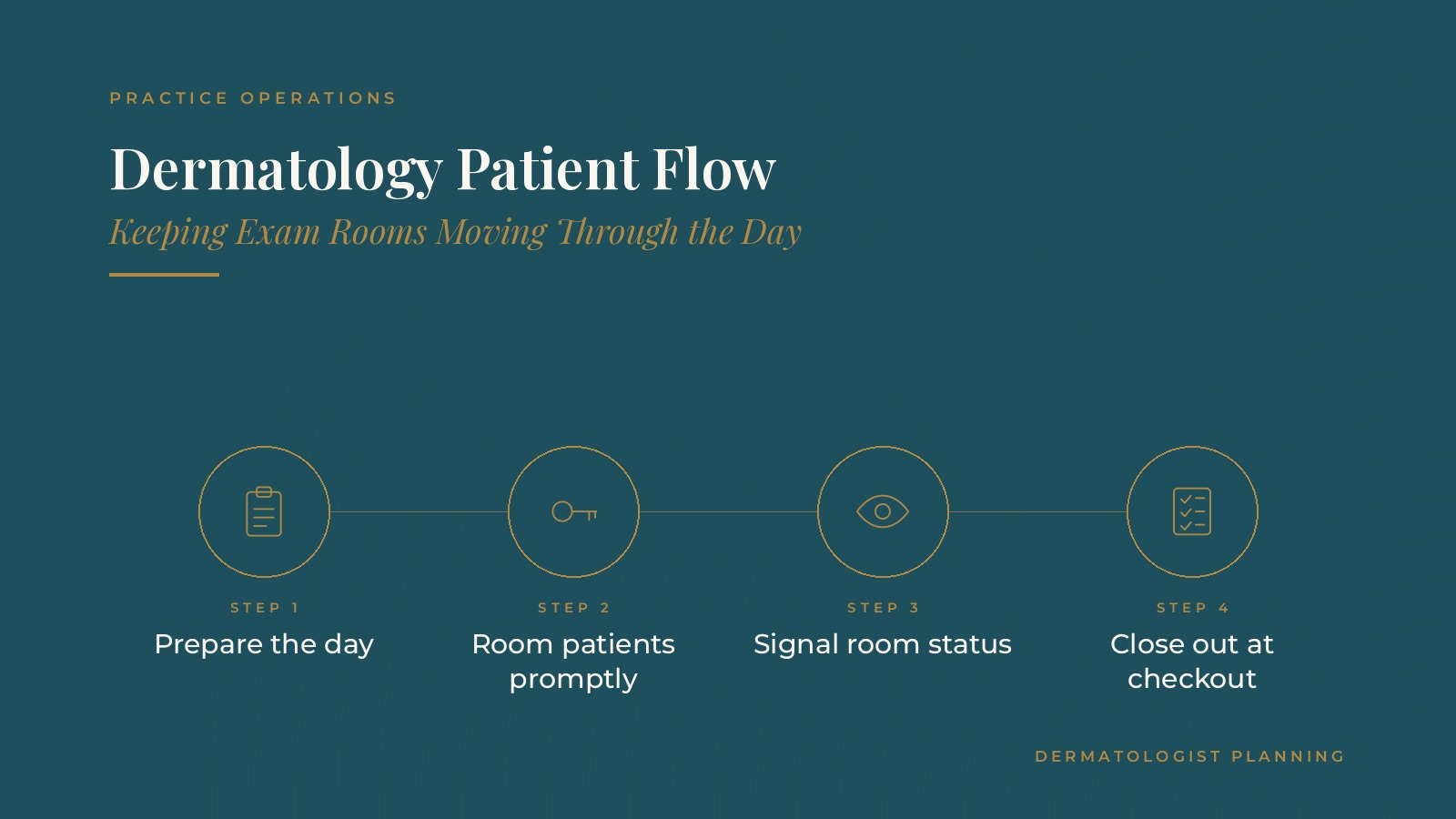
Dermatology Patient Flow | Keeping Exam Rooms Moving Through the Day
Dermatology patient flow is the path a patient follows from the moment they arrive until they leave, including check-in, rooming, the visit itself, any in-office procedure and checkout. When that path runs smoothly, exam rooms stay busy, waits stay short and staff are not scrambling to catch up by midafternoon.
In short, dermatology patient flow tends to run best when the day is prepared in advance, check-in is short and predictable, patients are roomed promptly, everyone can see which rooms are ready, procedure handoffs are planned and the team reviews the day briefly afterward.
This resource from Dermatologist Planning explains where dermatology visits usually slow down, how clinics prepare the day, room patients and signal room status, how procedures and checkout fit in and the questions practices often bring to an operations professional.
Key takeaways
- Prepare each clinic day the day before.
- Keep check-in short and predictable.
- Room patients as soon as rooms open.
- Make room status visible to everyone.
- Review flow briefly at the end of the day.
Where dermatology patient flow usually slows down
Many short visits in one day
Dermatology schedules often hold a high number of brief visits, such as skin checks, follow-ups and quick procedures. Small delays at any step can stack up quickly.
Medical and cosmetic visits side by side
Clinics that offer both medical and cosmetic care may run visits with very different lengths and room needs in the same session.
Procedures added during the visit
A biopsy or minor procedure added during a visit changes room time, supplies and staff needs on the spot. Planning for that possibility keeps the next patient from waiting.
Preparing the day before it starts
A morning huddle
A short huddle before the first patient lets the team review the schedule, flag visits likely to run long and confirm who covers each room. The dermatology front desk workflow guide covers the front desk side of that preparation.
Charts and forms ready in advance
Confirming that intake forms, referrals and prior records are in place the day before keeps check-in from stalling at the window.
Matching visit types to time slots
Templates that place longer visits, such as full skin exams or cosmetic consults, at set points in the session keep short visits from piling up behind them.
Rooms stocked for the schedule
Stocking each room for the visit types on that day's schedule cuts down on trips to the supply area during visits.
Dermatologist Planning can introduce you to independent practice operations professionals who work with dermatology practices on patient flow, rooming and front desk workflows. To request an introduction, contact us or call or text (972) 616-4581. You can also read about dermatology practice operations.
Check-in and rooming
A short, predictable check-in
Online forms completed before the visit and a simple arrival process keep the line at the front desk moving. The dermatology patient intake guide covers forms and arrival steps.
Rooming as soon as a room opens
Many clinics assign a medical assistant to bring the next patient back as soon as a room is ready, rather than waiting for the physician to finish charting.
A consistent rooming routine
A standard set of rooming steps, such as confirming the reason for the visit, updating basic history fields and preparing the area to be examined, helps every visit start the same way. The dermatology medical assistant training guide covers how teams learn those steps.
Room status signals and communication
Seeing which rooms are ready
Simple room status signals, such as door flags, lights or a status board in the scheduling system, show at a glance which rooms are waiting for a clinician, in a visit or ready to be cleaned.
Who moves to the next room
A simple rule for which clinician or assistant takes the next ready room, often agreed at the morning huddle, prevents rooms from sitting idle while staff check with each other.
Quick messages between staff
Secure team messaging or a shared status screen lets medical assistants and clinicians coordinate without walking the hallway looking for each other.
Updates for waiting patients
When the schedule runs behind, a brief update at the front desk tells patients roughly how long the wait will be and helps keep frustration low.
Procedures, handoffs and turnover
Planning for same-day procedures
Some clinics keep a procedure tray ready in each room or hold one room for procedures during busy sessions, so an added procedure does not stall the schedule.
Clear handoffs
A short, consistent handoff between the clinician and the medical assistant covers what supplies are needed and what the patient should hear before leaving the room.
Fast, thorough room turnover
A simple turnover checklist for cleaning and restocking helps each room get ready for the next patient quickly. Layout matters too, and the dermatology clinic layout guide explains how room placement shapes movement.
Checkout and the end of the visit
Next steps before the patient leaves
Scheduling the follow-up visit, sharing any after-visit instructions written by the clinician and confirming how results will be shared all happen before the patient reaches the door.
Keeping checkout separate from check-in
Clinics with enough space often separate the checkout point from the check-in window, so arriving and departing patients are not in the same line.
A short daily review
A few minutes at the end of the day to note where delays happened and what caused them gives the team specific changes to try the next day. A practice operations professional can explain how a dermatology practice operations review usually looks at flow over several weeks.
Questions practices bring to an operations professional
Common planning questions
- Where does the schedule fall behind most often, and why?
- How many rooms and medical assistants does each clinician need?
- How are same-day procedures planned into the schedule?
- Which simple measures, such as wait time and visit length, show progress?
Measuring patient flow
Many clinics track arrival to rooming time, time in room and checkout time for a few weeks, then review the pattern with the team rather than relying on impressions alone.
Frequently asked questions
What is dermatology patient flow?
It is the path a patient follows through the visit, from check-in and rooming to the visit, any procedure and checkout.
Why do dermatology schedules fall behind?
High visit volume, mixed medical and cosmetic visits and procedures added during visits can stack up small delays during the day.
How do clinics show which rooms are ready?
Many use door flags, lights or a status board in the scheduling system so staff can see each room's status at a glance.
How are same-day procedures handled?
Some clinics keep procedure trays in each room or hold one room for procedures so an added procedure does not stall the schedule.
How can a clinic measure patient flow?
Many track arrival to rooming time, time in room and checkout time for a few weeks and review the pattern with the team.
Request an introduction
Dermatologist Planning can introduce you to independent practice operations professionals who work with dermatology practices on patient flow, rooming and clinic day operations. Learn more about dermatology practice operations, then take the short Dermatologist Planning Business survey and request an introduction. You can also call or text (972) 616-4581, or contact us. The form goes to [email protected].

