


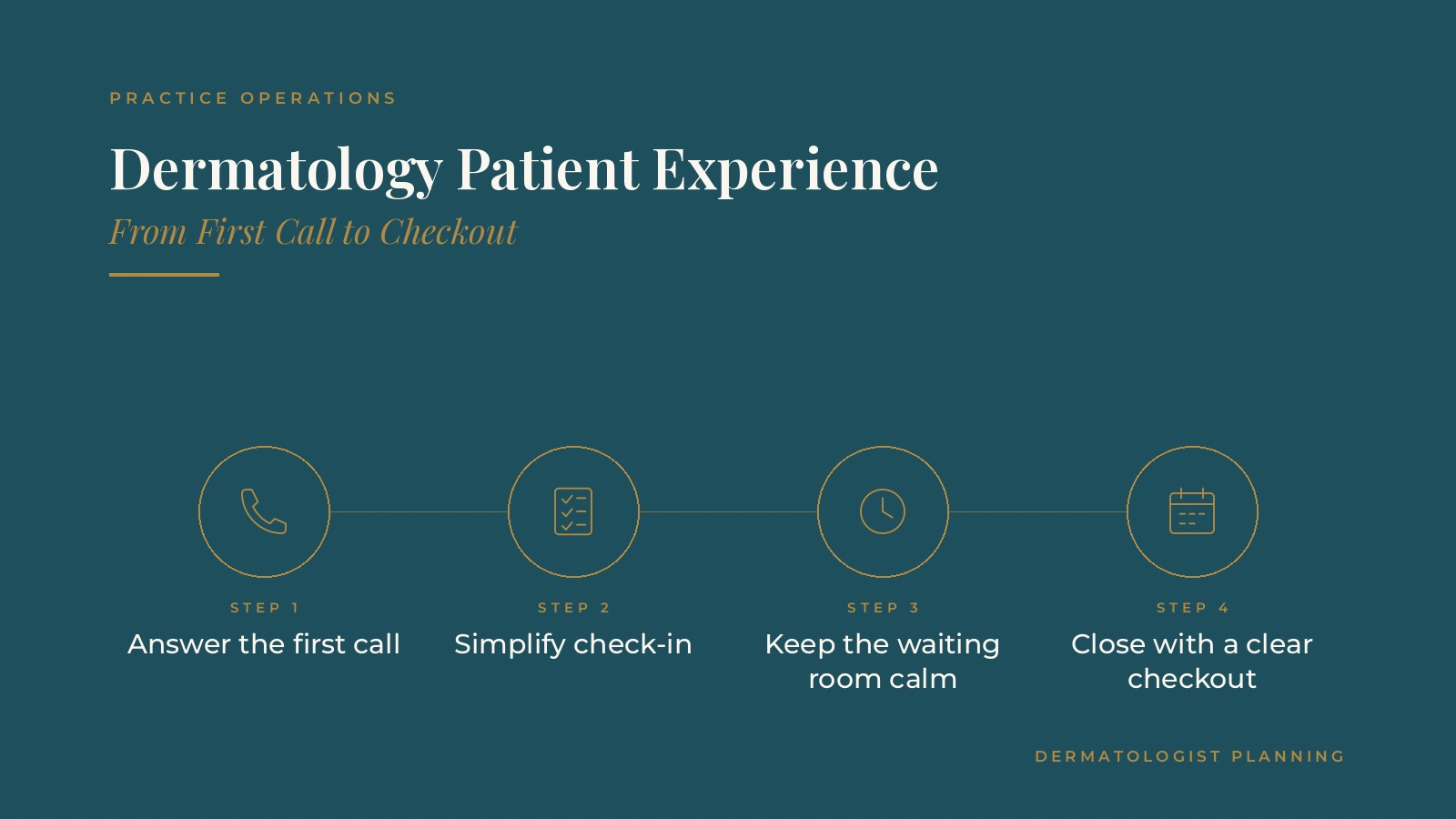
Dermatology Patient Experience: From First Call to Checkout
Dermatology patient experience is the full set of touchpoints a patient has with a practice, from the first phone call or website visit to the moment of checkout. It includes how calls are answered, how check-in works, how the waiting room feels, how the visit is run and how follow-up is arranged. In short, dermatology patient experience improves when a practice walks through each step of a visit, names an owner for each step and keeps simple routines the whole team can follow. Small, consistent details at the phone, desk and exam room add up to a calmer visit. This resource from Dermatologist Planning explains the steps of a typical dermatology visit, planning questions for each step and the routines practices use to keep the experience steady.
Key takeaways
- Map the visit from first call to checkout.
- Give each step a named owner.
- Keep check-in short and clear.
- Plan the waiting room and exam flow together.
- Close every visit with a clear next step.
Mapping the dermatology patient experience
Walk through the whole visit
A useful first exercise is to write down every step a patient takes: finding the phone number, calling, completing forms, arriving, checking in, waiting, seeing the clinical team and checking out. The list shows where steps are smooth and where they are crowded.
Name an owner for each step
When each step has an owner, questions have a clear destination. The phone belongs to the front desk lead, rooming to the clinical lead and checkout to a named team member.
Revisit the map each quarter
Visit types, staffing and technology change. A quarterly look at the map keeps it current. The guide to dermatology patient intake covers one of the busiest steps.
From the first call to check-in
Answering the phone
Callers want a person who answers promptly, listens and offers a clear next step. Greeting scripts, call menus and a plan for busy times help. The guide to dermatology scheduling describes how templates support the phone team.
Reminders before the visit
Text or email reminders with the time, location and what to bring reduce confusion. Many practices include parking and entrance details. The guide to dermatology patient texting covers message planning.
Arriving and checking in
A visible sign, a short line and a friendly greeting set the tone. Tablets or paper forms should be simple, and staff should be ready to help anyone who has questions.
Dermatologist Planning can introduce you to independent practice operations professionals who work with dermatology practices on front desk workflows, patient flow and checkout routines. To request an introduction, contact us or call or text (972) 616-4581. You can also read about dermatology practice operations.
The waiting room and exam flow
A calm waiting area
Comfortable seating, clear signs, readable reading material and a quiet atmosphere make waits easier. Some practices post a simple note about expected waits and update it when the schedule runs behind.
Smooth handoffs
Rooming, medical assistant steps and physician entry each need a clear handoff. A shared status board or a simple signal system tells everyone which rooms are ready.
Keeping visits on time
Visit blocks that match the real length of appointments reduce delays. The guide to dermatology no-shows covers a related topic that affects daily flow.
Checkout and follow-up
A clear next step
At checkout, many practices confirm any follow-up visit, hand over written instructions and make sure the patient knows whom to call with questions. A short checklist at the desk keeps the routine consistent.
Booking before the patient leaves
Scheduling the next visit at the desk is often easier for patients than calling later. A calendar view at the checkout station speeds the process.
Thanking the patient
A simple, warm closing, such as a thank you and a reminder of the phone number, leaves a good last impression. Staff can adjust wording to fit the practice's voice.
Everyday routines that keep the experience steady
A short daily huddle
Many practices begin the day with a brief team meeting to review the schedule, special needs and any changes. A few minutes of shared planning prevents many small surprises.
A visible checklist at each station
Front desk, rooming and checkout stations each benefit from a short checklist. New staff learn faster, and experienced staff have a quick reminder when the day gets busy.
A simple way to share observations
A shared note or whiteboard where staff can record what slowed the day or confused a patient gives the team material for the monthly review.
Regular small refreshes
Waiting room materials, signs and forms get out of date. A quarterly walk-through, from the front door to the checkout desk, shows what needs a fresh look.
Training for every role
Short training sessions on greeting, phone etiquette and handoffs keep the whole team using the same approach. Rotating who leads each session gives staff a chance to share what works.
Putting a patient experience plan together
Gather the inputs
Collect the visit map, the list of owners for each step, any patient comments the team has noted and the current check-in and checkout routines. Having these in one folder makes planning conversations faster and clearer.
Choose a few changes
Rather than changing everything at once, many practices choose two or three small changes for the quarter, such as a clearer greeting script, a shorter form or a better sign at the door.
Write the schedule
A one-page plan listing each change, its owner and the review date keeps everyone aligned. Share it with the whole team and update it as plans change.
Look back at the end of the quarter
At the end of the quarter, the team reviews what changed and what staff noticed. Keeping a short written record gives the next quarter a head start and helps new team members understand why routines look the way they do.
Questions for a practice operations professional
Planning questions
- Which steps of the visit are mapped and who owns each one?
- How are phone calls, check-in and checkout timed and reviewed?
- What routines keep the waiting room and exam flow on schedule?
- How will staff share observations about what patients find confusing?
- How often will the map be reviewed?
Collect feedback from the team
Front desk and clinical staff see friction that dashboards cannot show. A short monthly conversation about what worked and what did not often gives the best ideas for small improvements.
Frequently asked questions
What is dermatology patient experience?
It is the sum of a patient's interactions with a practice, including the first call, forms, check-in, waiting, the visit itself, checkout and follow-up.
How can a practice map the patient experience?
Many write down every step from the first call to checkout, name an owner for each step and review the list every quarter.
What are common friction points?
Phone wait times, lengthy forms, unclear check-in, waiting room delays and missing next steps at checkout are frequent areas that practices review.
Who is responsible for patient experience?
It is shared, but practices often name a practice administrator or front desk lead to coordinate the routines and gather team observations.
How often should routines be reviewed?
Most practices review them quarterly, and sooner when staffing, scheduling or technology changes.
Request an introduction
Dermatologist Planning can introduce you to independent practice operations professionals who work with dermatology practices on front desk workflows and patient flow. Learn more about dermatology practice operations, then take the short Dermatologist Planning Business survey and request an introduction. You can also call or text (972) 616-4581, or contact us. The form goes to [email protected].

